Why We Love the Green Season in Tanzania
When the rains arrive, Africa comes alive.
There is a version of safari that most people imagine before they ever visit Africa. Golden grass. Dusty tracks. Endless blue skies. Animals gathered around shrinking waterholes.
It is beautiful. It is iconic. And it is one of the reasons Tanzania has become one of the world’s great safari destinations.
But there is another side to Tanzania that deserves just as much attention: the green season.
This is when the rains return, the plains turn emerald, the air feels freshly washed, dramatic clouds gather above the horizon and the Serengeti seems to breathe a little deeper.
At Polecat Safaris, we love this time of year because it offers something that is increasingly precious in safari travel: space, beauty, intimacy and time to simply be in Africa.
And perhaps the greatest luxury of all? Having a wild place almost to yourself.
Green or Dry? Two Very Different Ways to Experience Africa
There is no single “perfect” time for a safari. The dry season and green season simply offer different experiences.
During the dry months, vegetation becomes thinner, wildlife often concentrates around permanent water and the weather is generally more predictable. It is an excellent time for classic game viewing, particularly for travellers visiting Tanzania for the first time or following the Great Migration north.
Then the rains arrive. And the story changes.
The plains become green. Flowers appear. Migratory birds arrive. Young animals begin to appear across the ecosystem. The skies become dramatic, and the soft afternoon rain can leave the landscape sparkling beneath the returning sunlight.
For us, that is the magic.
The Dry Season
Typically June to October. The dry season offers:
- Excellent general wildlife viewing
- Easier visibility through thinner vegetation
- Clearer and more predictable weather
- Excellent conditions for following the northern migration
- The possibility of Mara River crossings from around July onwards
- Cooler mornings and warm, dry afternoons
It is the classic safari experience — and for many travellers, exactly what they are looking for.
The Green Season
Broadly December to May, with changing conditions through the months. The green season offers something different:
- Lush, vibrant landscapes
- Dramatic skies and beautiful light
- Fewer visitors in many areas
- Excellent photographic conditions
- Abundant birdlife
- Predator activity
- The Great Migration’s calving season in the south
- A more intimate feeling in the wilderness
- Attractive value at many luxury properties
The green season is not simply the “cheaper season.” It is a different safari.
What Makes the Green Season So Special?
1. The Serengeti Becomes a Living Painting
After the rains, the transformation can be extraordinary.
The dry golden plains are replaced by shades of green. Acacia trees stand against enormous skies. Wildflowers appear across the grasslands. Clouds build in the distance before a shower sweeps across the horizon.
Then the rain passes. The sun returns. The landscape glows.
For photographers, this creates a completely different palette from the dry season — rich greens, deep skies, soft light and dramatic contrasts. But you do not have to be a photographer to appreciate it.
Sometimes it is enough to stop the vehicle, turn off the engine and simply listen.
The smell of rain on the earth. Birds calling from the trees. Wind moving through the grass. Nothing but wilderness around you.
That is safari too.
2. Fewer Vehicles. More Wilderness.
This is perhaps the part of green-season safari we love most.
Many travellers plan their holidays around the traditional peak season. As a result, the green months can be noticeably quieter in many parts of northern Tanzania. And fewer vehicles can change the feeling of a wildlife encounter completely.
Imagine finding a pride of lions resting beneath an acacia. No line of vehicles. No rushing. No feeling that you have to take your photograph quickly before someone else arrives. Just your private safari vehicle, your guide and the animals.
You can stay. Watch. Wait. Let the scene unfold naturally.
For a luxury safari, space is a form of luxury.
3. The Great Migration Has a Different Story to Tell
One of the biggest misconceptions about the green season is that it means missing the Great Migration. In reality, some of the most extraordinary moments of the migration happen during this period.
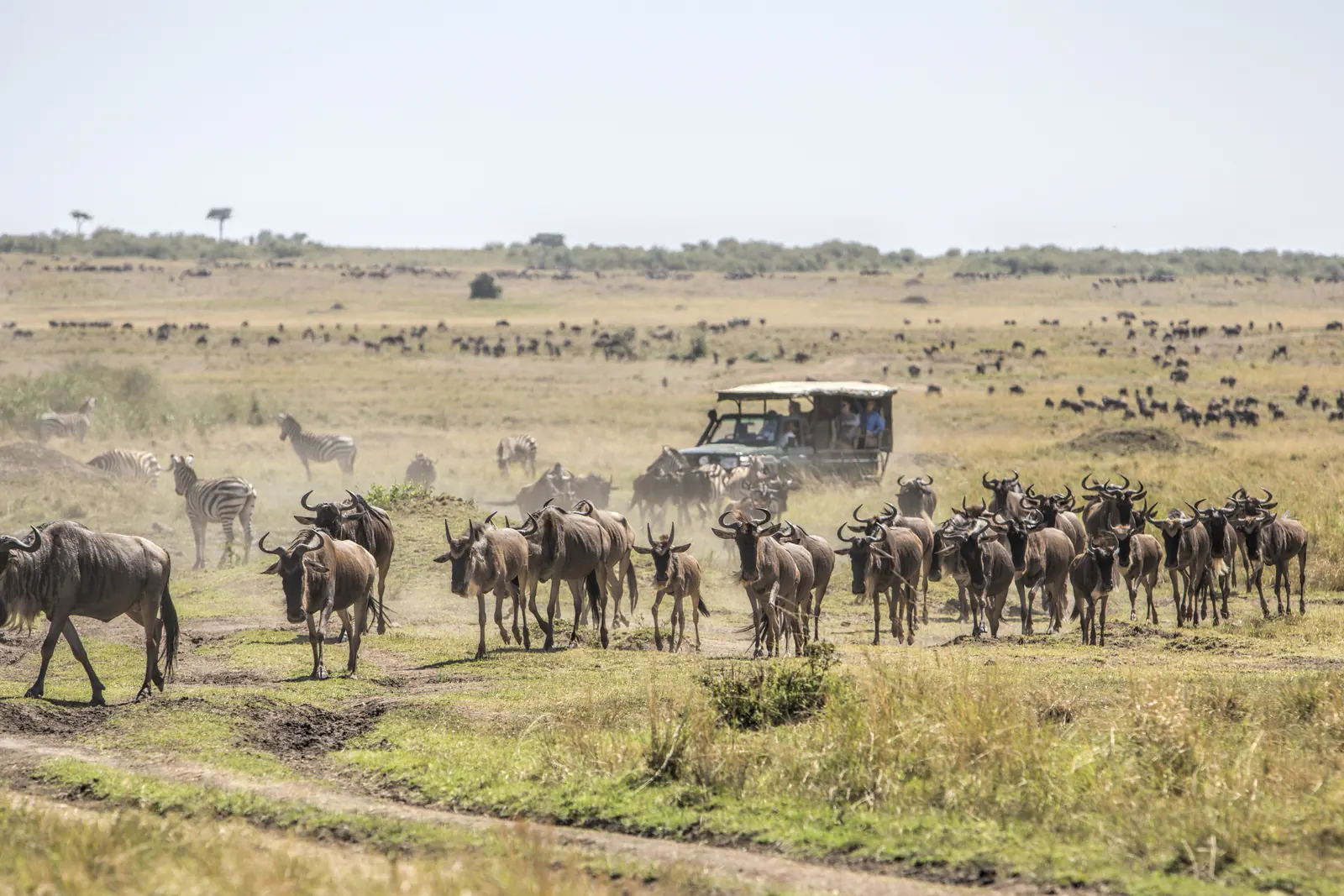
As the rains bring fresh grass to the southern plains, enormous herds of wildebeest move into the Ndutu and southern Serengeti ecosystem.
Then comes one of nature’s most remarkable events: the arrival of new life.
From around January through March, the plains become a nursery. Thousands of wildebeest calves are born, alongside young zebra and other plains game.
And where there are vulnerable young animals, predators are never far away. Lions. Cheetahs. Leopards. Hyenas. And other predators follow the herds, creating some of the most exciting wildlife viewing of the year.
It is not simply about watching animals. It is about watching an ecosystem at work.
4. The Green Season Is a Photographer’s Dream
If the dry season gives you Africa in gold, the green season gives you Africa in colour.
You may wake to mist over the plains. You may photograph elephants walking through fresh green grass beneath storm clouds. You may watch the sun break through after rainfall, creating extraordinary light across the landscape.
And sometimes the most memorable photograph is not an animal at all:
- The road disappearing toward the horizon
- A lone acacia beneath a storm
- A herd of zebra silhouetted against a glowing sky
- Raindrops on the bonnet of your safari vehicle
- A newborn wildebeest taking its first uncertain steps
The green season gives Africa atmosphere.
5. The Birds Arrive
For anyone who enjoys birdlife, the green season is particularly rewarding.
The rains bring fresh food and renewed activity throughout the ecosystem. Resident birds become more active, while migratory species add colour and variety to the landscape.
The Serengeti suddenly feels louder. Birdsong fills the morning. Raptors circle above the plains. Bright plumage stands out against the green grass.
For travellers who take their time, there is much more to discover than the Big Five.
6. The Luxury of Slowing Down
Luxury safari is not always about the biggest suite, the finest wine or the most elaborate camp. Sometimes luxury is simply having time:
- Time to stay longer at a sighting
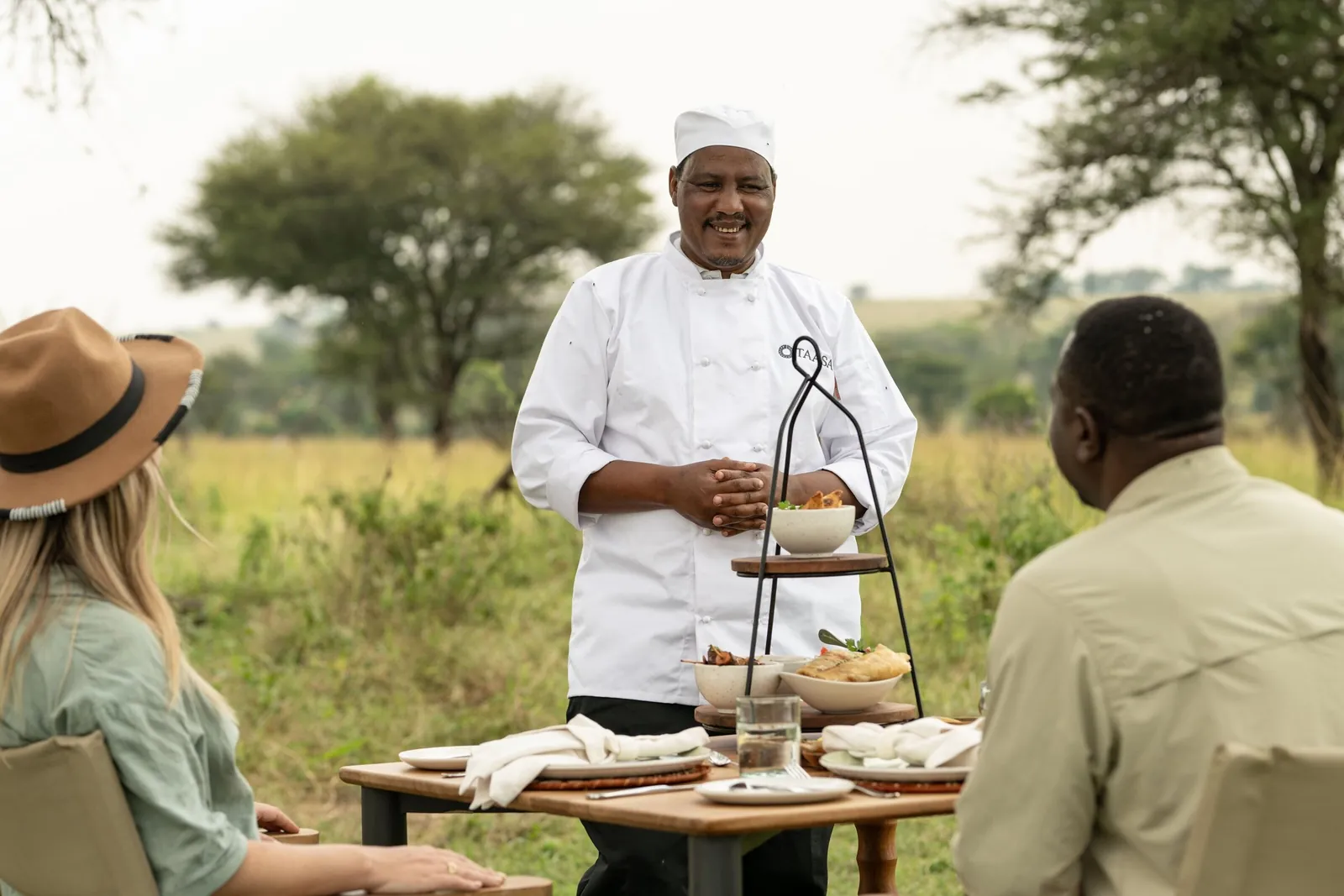
- Time to enjoy breakfast in the bush instead of rushing back to camp
- Time to sit beneath an acacia and watch elephants move across the plains
- Time to wait for the perfect light
- Time to have your morning coffee while the Serengeti wakes around you
The green season naturally encourages this slower rhythm. And this is very much how we like to travel at Polecat: less rushing, more experiencing.
7. Rain Is Part of the Experience
Let’s address the obvious question. “But doesn’t it rain?”
Yes. And that is exactly what makes the season green.
But the idea that a green-season safari means sitting inside your tent watching rain all day is misleading. Rainfall patterns vary, and showers can be brief, with sunshine returning afterwards. Weather is naturally unpredictable, so no safari operator can promise exactly when or where rain will fall.
What we can promise is that the rain is part of the landscape’s transformation. A storm rolling across the Serengeti can be one of the most beautiful sights of the day.
And there is something wonderfully luxurious about returning to camp after a game drive, warming up with a drink and watching the rain move across the plains from the comfort of your tent.
8. Green Season Does Not Mean “Less Wildlife”
Another misconception is that animals somehow disappear when the grass turns green. They don’t.
Tanzania has extraordinary resident wildlife throughout the year. Lions, elephants, leopards, cheetahs, buffalo, giraffes, hippos, hyenas and countless other species continue to live and hunt across the ecosystem.
What changes is how the ecosystem behaves. With water and fresh vegetation more widely available, animals can spread across larger areas. That can sometimes make sightings less concentrated than during the driest months.
But the reward is a Serengeti that feels alive in every direction. And in the south during calving season, the concentration of wildebeest and newborn calves creates an entirely different kind of abundance.
9. The Green Season Gives You More Than a Safari
One of the reasons we recommend looking beyond a single migration event is that Tanzania is much bigger than the migration. A carefully designed green-season safari can combine:
- Ndutu and the southern Serengeti for calving and predator action
- Central Serengeti for resident wildlife and big cats
- Ngorongoro Highlands for dramatic landscapes, walking and cultural experiences
- Tarangire for elephants, ancient baobabs and a completely different landscape
This creates a journey rather than simply a wildlife checklist. You are not travelling to Tanzania to see one animal. You are coming to experience Africa.
Green Season vs Dry Season
| Green Season | Dry Season | |
|---|---|---|
| Landscape | Lush, green and vibrant | Golden, dry and open |
| Wildlife | Excellent resident wildlife, plus calving in the south | Excellent general game viewing |
| Migration | Southern migration and calving, especially January to March | Northern migration and possible river crossings |
| Predators | Excellent, especially around calving areas | Excellent, with easier visibility in many areas |
| Birdlife | Particularly rewarding | Excellent resident species |
| Photography | Dramatic skies, green landscapes and soft light | Clear skies, golden landscapes and strong visibility |
| Atmosphere | Quieter and more intimate in many areas | Busier during peak periods |
| Weather | Rain showers are possible | Generally drier and more predictable |
| Value | Often more attractive rates and availability | Higher demand during peak periods |
| Feeling | Fresh, vibrant, peaceful | Classic, dramatic and adventurous |
So, Which Season Should You Choose?
That depends on what you want to feel.
If your dream is to watch the Great Migration gather around the Mara River, the dry-season months of roughly July to October are the period to consider.
If you want the drama of thousands of newborn wildebeest, green plains and predator activity, January to March in the Ndutu and southern Serengeti area can be extraordinary.
If you want dramatic landscapes, fewer vehicles, beautiful photography and a slower safari atmosphere, the green season deserves serious consideration.
And if you have already experienced Tanzania during the dry season? Come back when it rains. You may discover an entirely different Africa.
Our Favourite Kind of Luxury
At Polecat Safaris, we believe luxury is not simply about where you sleep. It is about how you experience the destination.
A beautiful camp matters. A comfortable bed matters. A private vehicle and an excellent guide matter. But so does having the freedom to stop when you want, stay longer when something catches your attention and enjoy Tanzania without constantly watching the clock.
That is why we love the green season. Because sometimes the most luxurious thing we can give you is not more. It is less.
Less traffic. Less rushing. Less noise. And more Africa. More space. More time. More moments that belong entirely to you.
Come when the plains turn green. Stay for the moments that stay with you.
Filed Under
- green season
- migration
- photography