Polecat Safaris
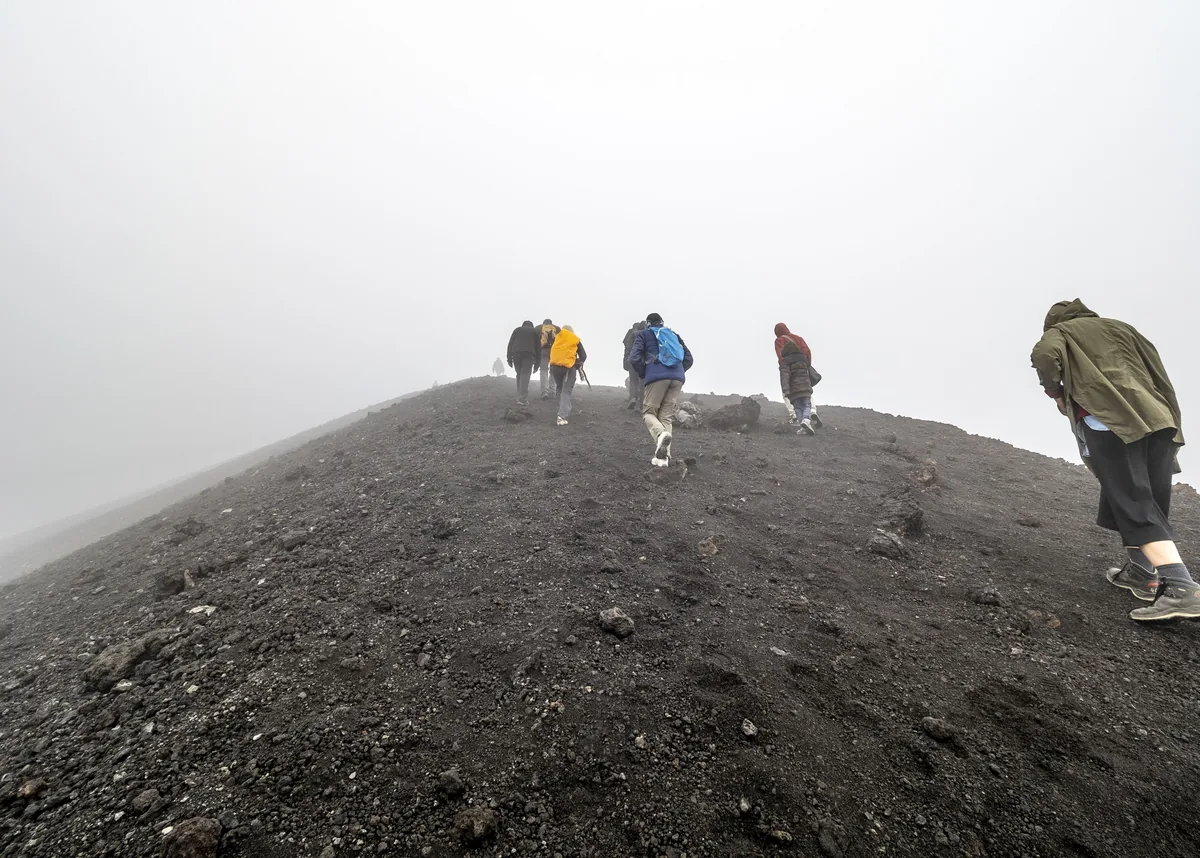
A file of trekkers working up a ridge of black volcanic ash in thick cloud, high on the mountain

Kilimanjaro Trek

7-Day Machame Route

Duration
7 Days
From
US$ 2,520 per person

Overview

The Whisky Route, and the most scenic way up the mountain — rainforest, the Shira moorland, the Lava Tower acclimatisation climb, the Barranco Wall, and a summit push from Barafu. Seven days rather than six, which is the difference between arriving at the crater rim acclimatised and arriving at it hoping.

  • The most scenic of Kilimanjaro’s routes, and the one most people climb
  • Four habitats in seven days — rainforest, moorland, alpine desert and the summit zone
  • A climb-high-sleep-low acclimatisation day at Lava Tower, 4,640 m
  • The Barranco Wall — a scramble rather than a technical climb
  • A seventh day, so the ascent is gradual rather than rushed
  • Uhuru Peak at 5,895 metres, reached at sunrise
  • Quality mountain tents, mess and cooking tents, camping chairs and tables
  • A hot shower and a complimentary massage waiting at the bottom
Duration
7 days, 6 nights
Destination
Kilimanjaro National Park
Stops
7
Experience
Kilimanjaro Trek
Best time
January – March & June – October

The route, and how far apart these places are

Arusha · Machame Gate · Shira · Barranco · Barafu · Uhuru Peak · Mweka

Route Map

Day by day

Every day here is private — your own guide and your own vehicle — so the order holds but the hours are yours to move.

Day 1 01

Arusha – Machame Gate – Machame Camp

After breakfast your private transfer takes you from Arusha to Machame Gate for registration and the park formalities.

The trek starts in thick rainforest, on a beautiful trail beneath the canopy — birdlife the whole way, and colobus monkeys if you are lucky.

Five or six hours in you reach Machame Camp, and your first night on the mountain.

Elevation
1,811 m – 3,021 m (+1,210 m)
Hiking
5–6 hours
Habitat
Rainforest
Meals
Lunch & dinner
Overnight
Machame Camp
Day 2 02

Machame Camp – Shira Camp

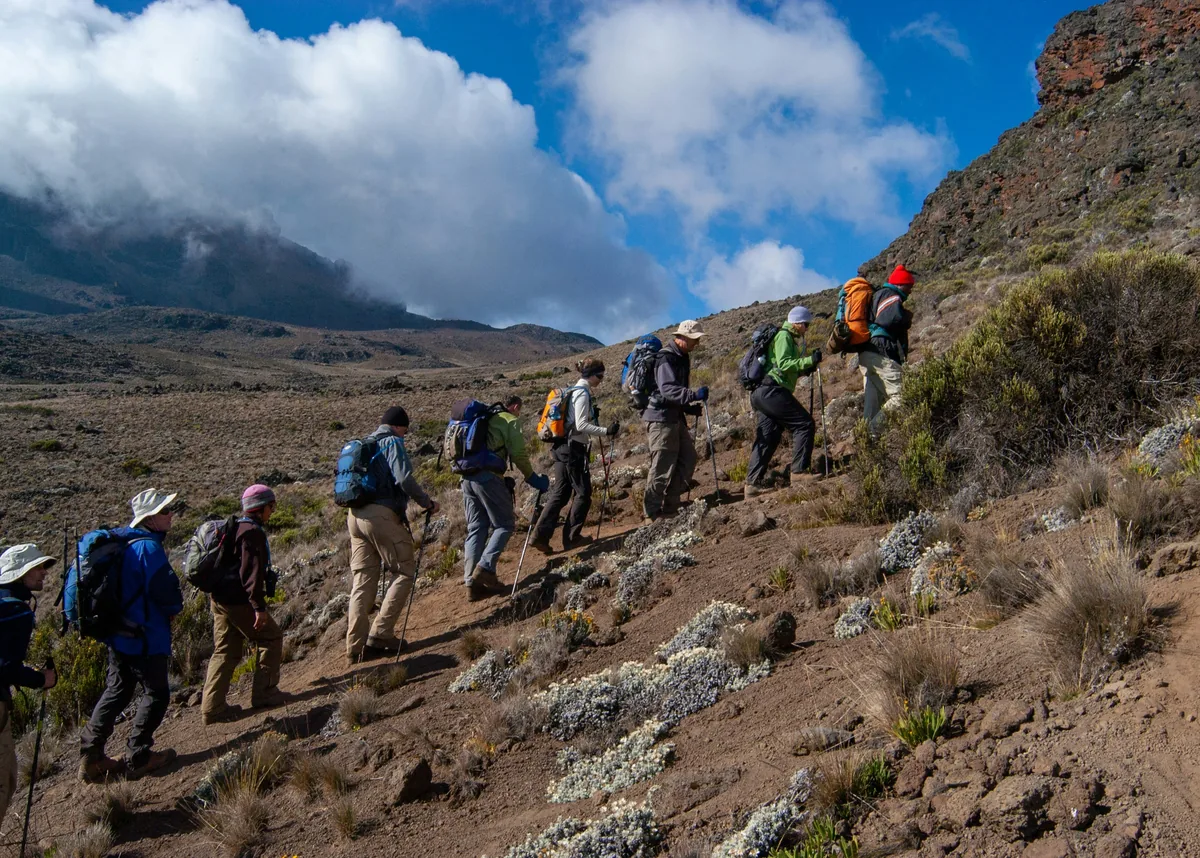
The rainforest gives way to open moorland as the trail climbs, and the mountain gets very much bigger around you.

By the time you reach Shira Camp the landscape is wide open, with Kibo ahead and the highlands falling away behind. There is time to rest and take it in.

Elevation
3,021 m – 3,839 m (+818 m)
Hiking
4–5 hours
Habitat
Moorland
Meals
Breakfast, lunch & dinner
Overnight
Shira Camp
Day 3 03

Shira Camp – Lava Tower – Barranco Camp

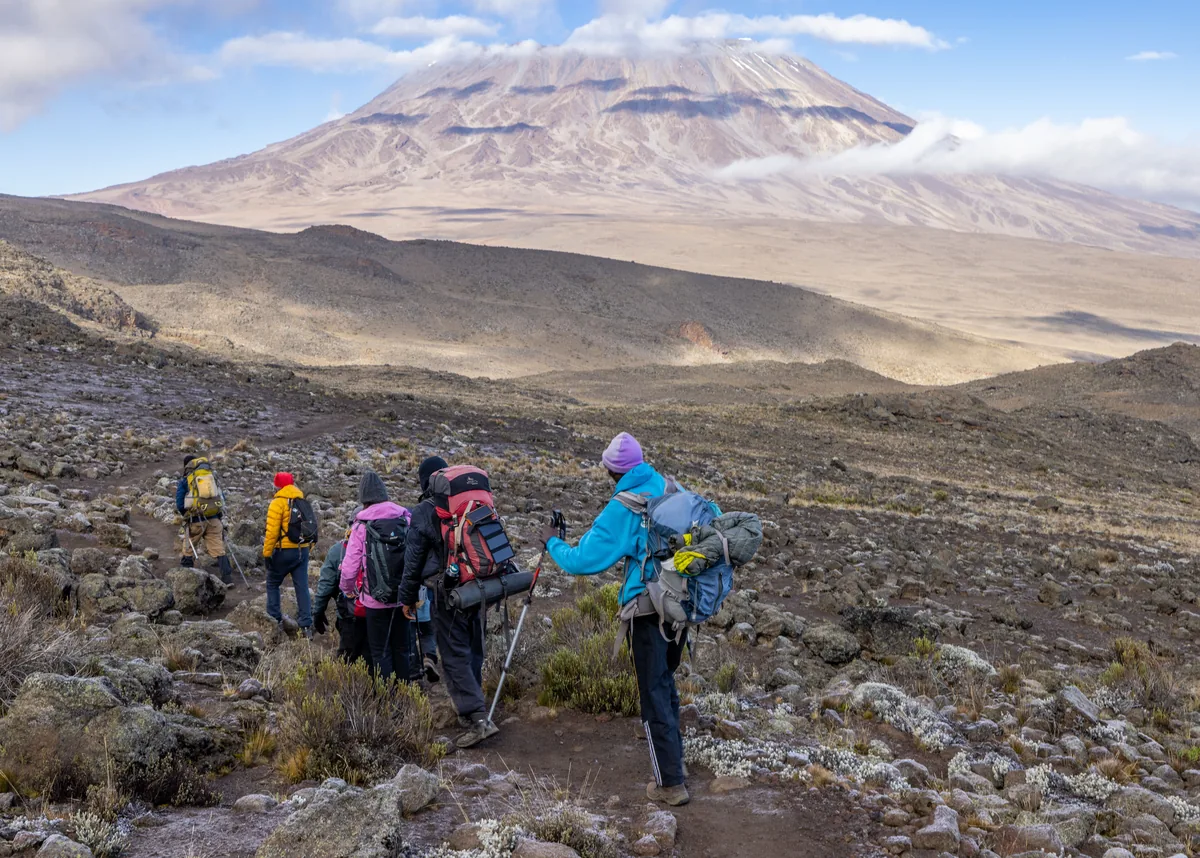
The most important day of the climb for acclimatisation, and one of the most memorable to walk.

You climb gradually to Lava Tower at around 4,640 metres, then descend towards Barranco Camp. Gaining the altitude and then giving it back is what teaches your body to cope with it.

The volcanic landscape up here is the strangest on the mountain.

Elevation
3,839 m – Lava Tower – approx. 3,986 m
Hiking
5–7 hours
Habitat
Alpine desert
Meals
Breakfast, lunch & dinner
Overnight
Barranco Camp
Highlight
Lava Tower at 4,640 m — climb high, sleep low
Day 4 04

Barranco Camp – Karanga Camp

The day starts with the Barranco Wall. It looks worse from below than it is — a steady scramble with your hands on rock in places, and no technical climbing at all.

Above the wall the trail carries on through the Karanga Valley to camp. It is a short day on purpose: the rest and the altitude are doing more for you than the distance would.

Elevation
3,986 m – 4,034 m
Hiking
3–4 hours
Habitat
Alpine desert
Meals
Breakfast, lunch & dinner
Overnight
Karanga Camp
Highlight
The Barranco Wall
Day 5 05

Karanga Camp – Barafu Camp

On through the alpine desert to Barafu, the last camp before the summit. The ground is bare and the scale of the thing is unmistakable from here.

You eat well, lay out your summit gear and sleep early. You will be up again around midnight.

Elevation
4,034 m – 4,662 m (+628 m)
Hiking
3–4 hours
Habitat
Alpine desert
Meals
Breakfast, lunch & dinner
Overnight
Barafu Camp
Day 6 06

Barafu Camp – Uhuru Peak – Mweka Camp

Around midnight your guides wake you for a hot drink and a light meal, and the summit push begins in the dark.

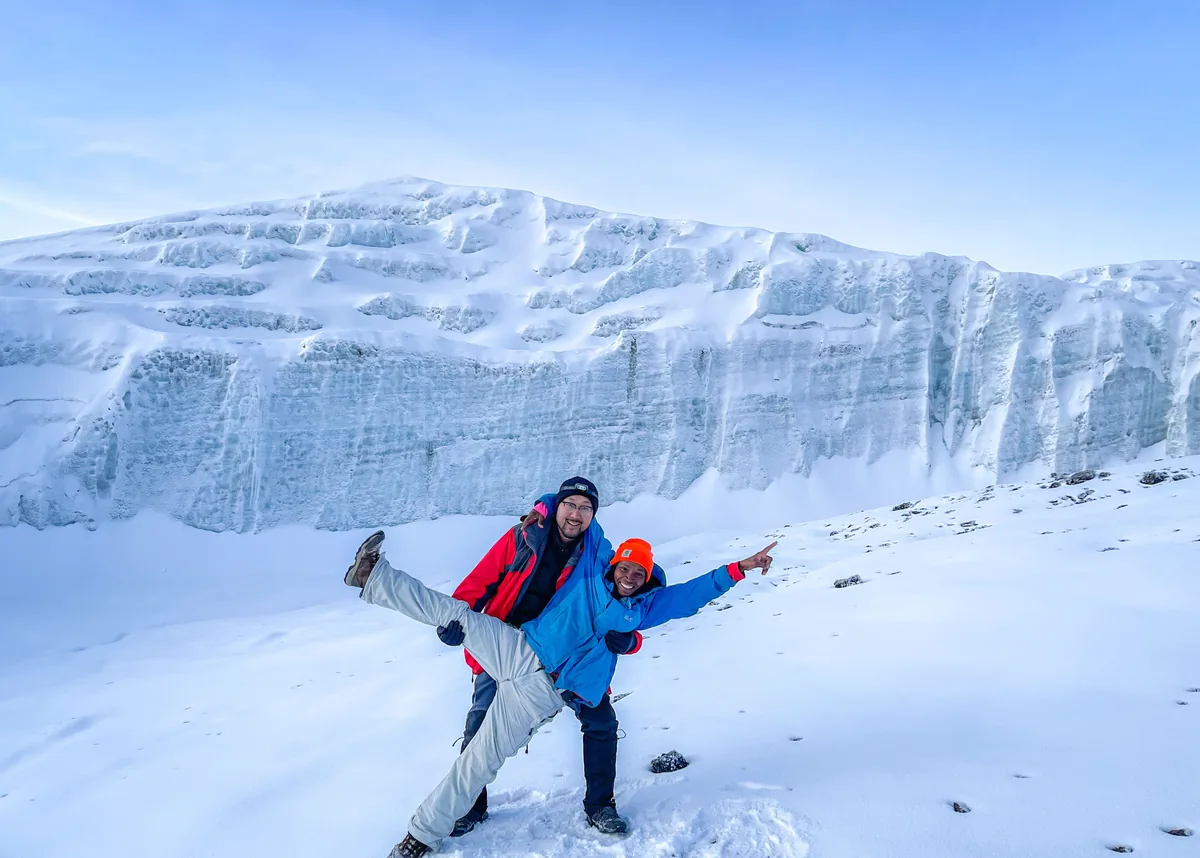
You climb towards Stella Point on the crater rim, and from there on to Uhuru Peak at 5,895 metres. The sun comes up over Africa somewhere along the way.

After time at the top you descend to Barafu for a rest and a meal, then carry on down to Mweka Camp for your last night on the mountain.

Summit
5,895 m (+1,233 m)
Ascent
5–7 hours
Descent
5–6 hours, approx. 2,789 m lost
Habitat
High alpine & summit zone
Meals
Breakfast, lunch & dinner
Overnight
Mweka Camp
Highlight
Sunrise from Uhuru Peak, the highest point in Africa
Day 7 07

Mweka Camp – Arusha

A last descent through the rainforest to Mweka Gate, where your driver is waiting.

From there it is the transfer back to Arusha or Moshi — a hot shower, a proper bed, and a climb behind you.

Elevation
3,106 m – 1,633 m (−1,473 m)
Hiking
3–4 hours
Habitat
Rainforest
Meals
Breakfast & lunch

What the rate covers

Everything below is settled before you travel. What isn’t covered is listed just as plainly, so nothing on this trip arrives as a surprise.

Included

  • Airport transfers from Kilimanjaro International Airport or Arusha Airport
  • Hotel-to-gate and return transfers
  • A professional mountain guide
  • An experienced mountain crew and adequate porters
  • A mountain cook, and fresh meals throughout the trek
  • Kilimanjaro National Park entrance and conservation fees
  • Rescue fees
  • Camping fees
  • Accommodation in quality mountain tents
  • Mess and cooking tents, with camping chairs and tables
  • A sleeping mattress
  • Walking poles
  • An oximeter and an emergency oxygen cylinder, with daily altitude monitoring
  • A medical kit
  • Drinking water, approximately 3 litres a day
  • Storage for excess luggage not needed on the mountain
  • A hot shower and a complimentary massage after the descent
  • VAT and applicable government taxes

Not included

  • International or domestic flights
  • Personal hiking and mountain equipment
  • Travel insurance
  • Tips for the mountain crew
  • A private toilet, available at an additional cost
  • Additional porter services
  • Personal expenses

Questions

How hard is the Barranco Wall?
Less hard than it looks from the camp below it. It is a steady scramble — you will use your hands on a few sections — rather than a technical climb, and no ropes or equipment are needed. Your guide sets the pace and the crew go up it carrying everything.
Do I need mountaineering experience?
No. Kilimanjaro is a trek rather than a technical climb, and no route on it needs ropes or rock skills. What it does need is preparation, determination and a good level of fitness — and enough days on the mountain to acclimatise, which is why we sell the longer versions of each route.
What happens about the altitude?
Your guide checks your oxygen saturation and pulse with an oximeter every day and sets the pace off what he sees. An emergency oxygen cylinder and a medical kit go up the mountain with the crew. Every itinerary here is built around acclimatisation — the extra night, the climb-high-sleep-low day at Lava Tower — rather than the shortest line to the summit.
Can you cater for my diet?
Yes. Vegetarian, vegan, halal and gluten-free meals can all be arranged with advance notice — tell us when you book and the mountain cook will carry what he needs.
Can I add a safari or Zanzibar afterwards?
Most people do. The climb ends back in Arusha or Moshi, an easy transfer from the northern circuit, so it joins straight onto a private safari through Tarangire, Ngorongoro and the Serengeti — or onto a flight to Zanzibar for a few days by the Indian Ocean. Tell us at the enquiry stage and we will draft the whole thing as one journey.

Travel this one

Tell us roughly when, and we’ll come back with dates, the camps that are open and what the 7-day rate looks like for your party.

Or reach the team in Arusha directly — +255 654 592 688 or WhatsApp.

We reply within one working day.